
Hamza Asumah, MD. MBA
In Africa, managing a healthcare business can be challenging due to factors such as limited resources, lack of infrastructure, and a high demand for healthcare services. However, one critical factor that can contribute to the success of a healthcare business in Africa is emotional intelligence. In this blog, we will discuss the role of emotional intelligence in managing a healthcare business in Africa.
Emotional intelligence refers to the ability to recognize, understand, and manage one’s own emotions, as well as the emotions of others. It involves the ability to perceive emotions accurately, to use emotions to facilitate thinking, to understand emotions and their causes, and to manage emotions effectively in oneself and others.

Photo By The Neurosurgical Atlas
There are several components of emotional intelligence, including:
1. Self-awareness: the ability to recognize and understand one’s own emotions, as well as their impact on thoughts and behavior.
2. Self-regulation: the ability to manage and control one’s own emotions, especially in stressful or difficult situations.
3. Motivation: the ability to use emotions to drive and sustain behavior towards achieving a goal.
4. Empathy: the ability to recognize and understand the emotions of others, and to respond appropriately.
5. Social skills: the ability to communicate effectively, build and maintain relationships, and manage conflicts.
For example, research has shown that leaders with higher levels of emotional intelligence are more effective at managing teams, building relationships with stakeholders, and fostering a positive work environment. This can lead to higher levels of employee engagement, job satisfaction, and retention.
In the healthcare industry, where patient care is the primary focus, emotional intelligence can also play a critical role. Healthcare providers with higher levels of emotional intelligence are better able to communicate with patients and their families, understand their needs and concerns, and provide compassionate care. This can lead to higher levels of patient satisfaction and trust, which are important measures of success in the healthcare industry.
There is also evidence to suggest that emotional intelligence can have a positive impact on financial performance. A study published in the Harvard Business Review found that companies with higher levels of emotional intelligence had higher levels of profitability, productivity, and customer satisfaction.
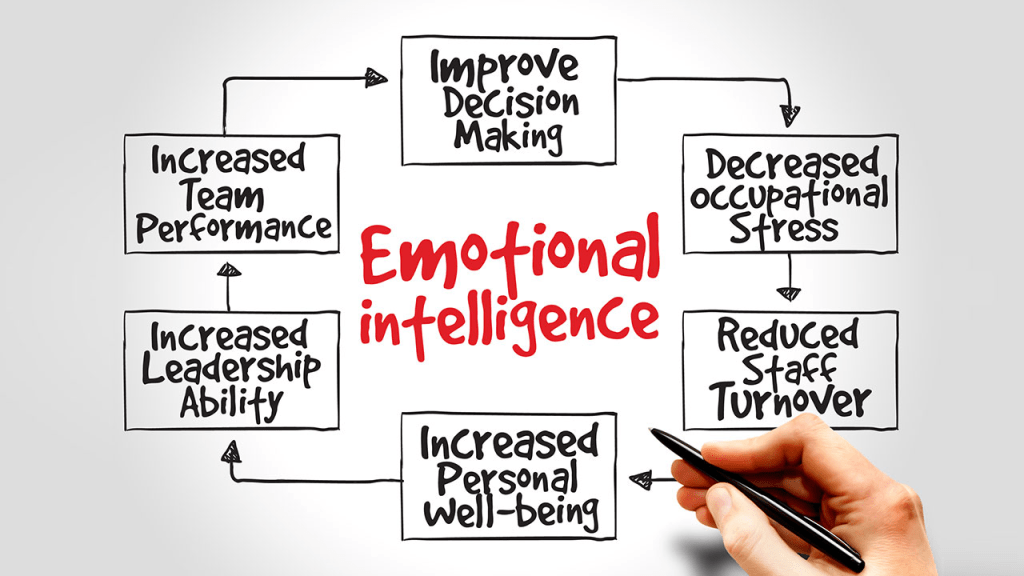
Photo By College of Executive Coaching
1. A study published in the Journal of Organizational Behavior found that managers with higher levels of emotional intelligence were more effective at fostering a positive work environment, building relationships with employees, and promoting employee engagement and well-being.
2. A study published in the Academy of Management Journal found that leaders with higher levels of emotional intelligence were more effective at creating a positive organizational culture, promoting teamwork, and achieving business goals.
3. A study published in the International Journal of Leadership in Education found that school principals with higher levels of emotional intelligence were more effective at managing staff, building relationships with students and parents, and creating a positive school culture.
4. A study published in the Journal of Occupational and Organizational Psychology found that employees with higher levels of emotional intelligence were more effective at managing stress, coping with change, and adapting to new situations.
5. A study published in the Harvard Business Review found that companies with higher levels of emotional intelligence had higher levels of profitability, productivity, and customer satisfaction.
Overall, these studies and others suggest that emotional intelligence can have a significant impact on business success, including leadership effectiveness, employee engagement and well-being, organizational culture, and financial performance.
Emotional intelligence is a key factor in personal and professional success, as it can help individuals navigate complex social situations, build strong relationships, and achieve their goals.

Photo By The Enterprisers Project
These are ways emotional intelligence can help you effectively manage your healthcare business..
1. Building relationships with patients and staff
As a healthcare business owner or manager, it is essential to build strong relationships with both patients and staff. Patients who feel valued and cared for are more likely to return for future services, while staff who feel appreciated and supported are more likely to be satisfied in their work and provide better patient care. Emotional intelligence plays a crucial role in building these relationships by helping managers understand and respond to the emotions of others.
2. Managing conflicts
Conflicts are a common occurrence in healthcare businesses in Africa, whether it is between staff members or with patients and their families. Emotional intelligence can help managers effectively manage conflicts by understanding the emotions of all parties involved and finding a resolution that satisfies everyone.
3. Managing stress
Managing a healthcare business in Africa can be stressful due to various factors, such as long working hours, high patient volumes, and limited resources. Emotional intelligence can help managers manage stress by recognizing their own emotions and finding healthy ways to cope with them. This can help prevent burnout and ensure that managers are better equipped to handle the demands of their job.
4. Making decisions
Making decisions in a healthcare business in Africa can be complex and challenging. Emotional intelligence can help managers make better decisions by taking into account the emotions of all stakeholders involved, including patients, staff, and the community.
5. Fostering a positive work environment

Photo By Excelsior University
A positive work environment is essential for the success of a healthcare business in Africa. Emotional intelligence can help managers foster a positive work environment by recognizing and addressing negative emotions such as frustration, anger, or resentment. By creating a positive work environment, managers can improve staff morale and patient satisfaction.
Emotional intelligence plays a critical role in managing a healthcare business in Africa. By building strong relationships, managing conflicts, managing stress, making decisions, and fostering a positive work environment, managers can improve the success of their healthcare business. Therefore, it is essential for healthcare business owners and managers in Africa to develop their emotional intelligence skills and apply them in their daily work.
Please share your insights in the comment section below


 Dr. Hamza Asumah
Leave a comment