
Hamza Asumah, MD, MBA
Sustainability has become a critical consideration in every industry, including healthcare. As healthcare entrepreneurs strive to innovate and provide quality services, incorporating sustainable practices into their business models is essential for long-term success. Sustainability in healthcare entrepreneurship involves addressing environmental, social, and economic factors to ensure the well-being of current and future generations. In this blog post, we will explore the significance of sustainability in healthcare entrepreneurship, sustainable practices, benefits, case studies, and an action plan for integrating sustainability into healthcare businesses.
Sustainable Practices
1. Reducing Waste: Healthcare facilities generate a substantial amount of waste, including medical supplies, packaging, and hazardous materials. Implementing waste reduction strategies such as recycling, reusing materials, and proper disposal can significantly minimize environmental impact.
2. Energy Efficiency: Healthcare facilities are energy-intensive operations. Investing in energy-efficient equipment, utilizing natural light, optimizing heating and cooling systems, and implementing renewable energy sources can reduce energy consumption and lower operational costs.
3. Sustainable Sourcing: Procuring sustainable and ethically sourced products and materials is crucial for reducing the environmental footprint of healthcare operations. This includes purchasing eco-friendly medical supplies, furniture made from recycled materials, and supporting suppliers with sustainable practices.
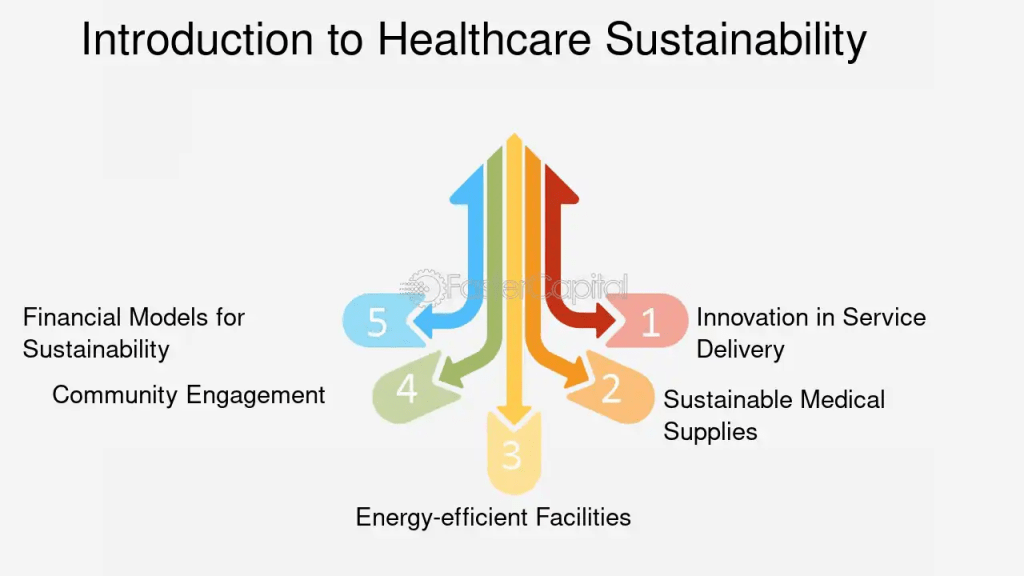
Photo By Faster Capital
Benefits
1. Cost Savings: Implementing sustainable practices can lead to cost savings through reduced energy consumption, waste management costs, and operational efficiencies.
2. Improved Public Image: Consumers are increasingly conscious of sustainability issues. By demonstrating a commitment to sustainable practices, healthcare entrepreneurs can enhance their reputation and attract environmentally conscious customers.
3. Regulatory Compliance: Adhering to sustainability standards and regulations not only mitigates risks but also ensures compliance with environmental laws and industry guidelines.
Case Studies
1. Kaiser Permanente: Kaiser Permanente, a leading healthcare provider, has implemented various sustainability initiatives, including energy-efficient buildings, waste reduction programs, and sustainable sourcing practices. This has not only reduced their environmental impact but also improved operational efficiency.
2. Practice Greenhealth: Practice Greenhealth is a nonprofit organization that helps healthcare facilities implement sustainable practices. Through their guidance, many healthcare organizations have achieved significant cost savings and environmental benefits.
Action Plan
1. Conduct a Sustainability Assessment: Evaluate current practices and identify areas for improvement, such as waste management, energy consumption, and supply chain sustainability.
2. Set Sustainability Goals: Establish measurable and achievable sustainability goals aligned with your business objectives, such as reducing waste by a certain percentage or increasing energy efficiency.
3. Implement Sustainable Practices: Integrate sustainable practices into daily operations, including waste reduction, energy efficiency measures, and sustainable sourcing of products and materials.
4. Monitor and Measure Progress: Regularly track and evaluate key performance indicators related to sustainability goals to ensure progress and identify areas for further improvement.
5. Engage Stakeholders: Educate and involve employees, suppliers, and customers in sustainability initiatives to foster a culture of environmental responsibility and commitment to sustainable practices.

Photo By EHL Insights
In conclusion, sustainability is not just a buzzword but a fundamental principle that healthcare entrepreneurs must embrace to ensure long-term success and contribute to a healthier planet. By incorporating sustainable practices, healthcare businesses can reap numerous benefits, from cost savings to improved public image. Through case studies and an action plan, entrepreneurs can gain insights into how to integrate sustainability into their healthcare businesses effectively. Embracing sustainability in healthcare entrepreneurship
Please leave your comments below

 Dr. Hamza Asumah
Leave a comment