
Hamza Asumah, MD, MBA
Artificial intelligence (AI) is revolutionizing the healthcare industry by offering innovative solutions to complex challenges. The integration of AI in healthcare presents opportunities for improving patient care, optimizing operations, and enhancing outcomes. However, the adoption, implementation, and scaling of AI solutions come with leadership perspectives and challenges that need to be addressed for successful integration.
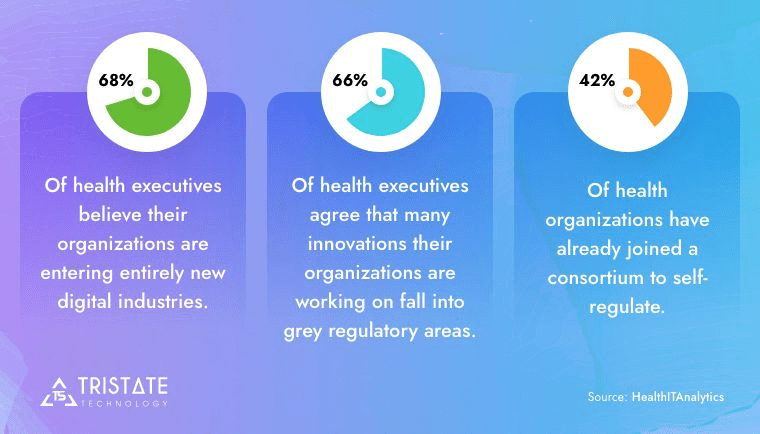
Photo By TriState Technology
Role of AI in Healthcare
AI in healthcare encompasses a wide range of applications, including disease diagnosis, personalized treatment plans, predictive analytics, and administrative tasks optimization. AI enables healthcare providers to analyze vast amounts of data rapidly, identify patterns, and make data-driven decisions to improve patient outcomes. With AI, healthcare organizations can streamline processes, reduce costs, and enhance the overall quality of care.
Leadership Perspectives
Healthcare leaders play a crucial role in driving the implementation and adoption of AI in healthcare settings. They need to understand the potential benefits of AI, communicate the vision effectively, and align organizational goals with technological advancements. Leadership perspectives on AI in healthcare include the following key aspects:
1. Strategic Vision: Healthcare leaders need to develop a strategic vision for integrating AI into existing healthcare systems. They should focus on the long-term impact of AI on patient care, operational efficiency, and organizational growth.
2. Data Governance: Leaders must prioritize data governance and security to ensure the ethical and responsible use of AI technologies. They need to establish clear protocols for data collection, storage, and utilization to maintain patient confidentiality and compliance with regulations.
3. Change Management: Implementing AI in healthcare requires a cultural shift within organizations. Leaders need to champion change management initiatives, foster a culture of innovation, and provide training and support to staff members to embrace AI technologies effectively.

Photo By Scientific Research Publishing
Challenges in Implementing AI in Healthcare
Despite the potential benefits of AI in healthcare, several challenges hinder its widespread adoption. Healthcare leaders face the following challenges when integrating AI solutions:
1. Regulatory Compliance: Healthcare organizations must comply with strict regulations and standards governing data privacy, security, and ethical use of AI technologies. Leaders need to navigate complex regulatory landscapes to ensure compliance and mitigate risks.
2. Resource Constraints: Implementing AI requires significant investments in technology infrastructure, training, and talent acquisition. Leaders must allocate resources effectively and demonstrate a return on investment to justify the costs associated with AI implementation.
3. Interoperability: Integration of AI systems with existing healthcare IT infrastructure and electronic health records (EHRs) can be challenging. Leaders need to address interoperability issues to ensure seamless data exchange and communication between AI platforms and other systems.

Photo By Deloitte
Integrating AI in healthcare offers transformative opportunities for improving patient care and operational efficiency. However, healthcare leaders face various challenges in adopting, implementing, and scaling AI solutions. By understanding leadership perspectives, addressing key challenges, and fostering a culture of innovation, healthcare organizations can harness the full potential of AI to drive positive outcomes and revolutionize the healthcare landscape.
Please leave your comments below

 Dr. Hamza Asumah
Leave a comment