
Hamza Asumah, MD, MBA
Succession planning is a crucial strategy in the healthcare industry to ensure the continuity, stability, and long-term success of healthcare services. As hospitals and healthcare facilities face workforce challenges and leadership transitions, investing in developing and mentoring the next generation of leaders becomes essential. Let’s delve into the importance of succession planning in healthcare, strategies for developing future leaders, and the data that supports these key points.

Photo By Greater Phoenix in Business Magazine
Importance of Succession Planning in Healthcare
In the fast-paced and dynamic field of healthcare, having a robust succession plan is imperative for seamless leadership transitions and maintaining high-quality patient care. Succession planning goes beyond just replacing outgoing leaders; it involves proactively identifying and grooming talent to fill critical roles within the organization. Without a well-defined succession plan, healthcare organizations risk disruptions in services, strategic direction, and knowledge transfer during leadership changes.
Data supports the significance of succession planning in healthcare:
1. According to a study by HR for Health, healthcare organizations with effective succession planning programs have higher employee retention rates and greater organizational resilience.
2. Research from leading healthcare management journals indicates that institutions with structured succession plans are better equipped to navigate leadership transitions and maintain operational efficiency.
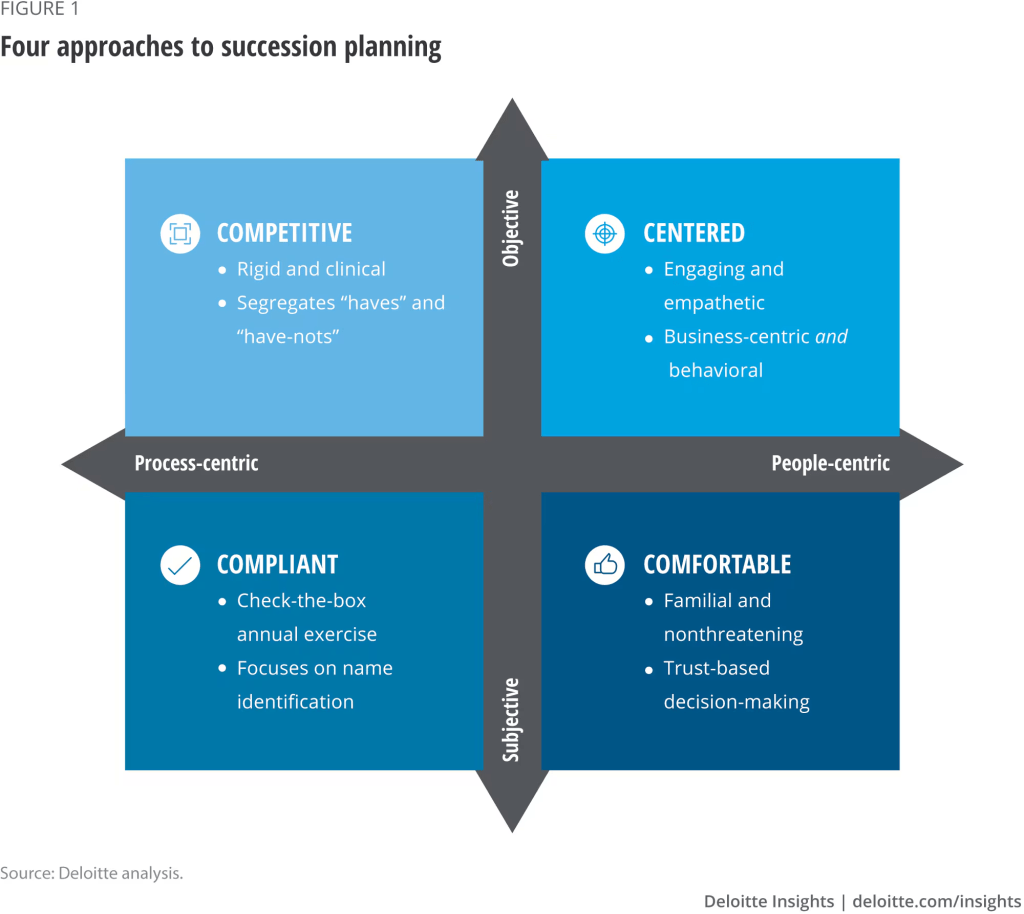
Photo By Deloitte
Developing Future Leaders in Healthcare
Strategies for developing and mentoring future leaders in healthcare include:
1. Identifying Key Positions: Healthcare organizations should identify critical roles essential for operational continuity and long-term success. This involves assessing positions at all levels, from frontline staff to executive leadership.
2. Recognizing Potential Successors: Once key positions are identified, healthcare leaders must assess current staff for their leadership potential, skills, and interest in advancing within the organization. Building a diverse pool of talent ensures inclusivity and diverse perspectives in succession planning.
3. Assessing Skills and Competencies: Evaluating potential successors based on their skills, competencies, and performance is crucial for effective succession planning. Leadership abilities, decision-making skills, and industry-specific knowledge are key competencies to consider.
4. Providing Development Opportunities: Offering training, mentorship, and professional development programs to nurture future leaders is essential. These programs help in honing leadership skills, preparing individuals for higher roles, and fostering a culture of continuous learning within the organization.

Photo By Police1
Succession planning is a strategic imperative for healthcare organizations to prepare for leadership transitions, drive organizational resilience, and develop a pipeline of skilled leaders. By investing in succession planning and mentorship programs, healthcare institutions can ensure continuity, operational efficiency, and sustained growth in the ever-evolving healthcare landscape. The data supports the positive impact of succession planning on employee engagement, organizational performance, and long-term success in healthcare.
As the healthcare industry continues to evolve, effective succession planning remains a cornerstone for building a sustainable and resilient healthcare system that can adapt to future challenges and opportunities.
Please leave your comments below

 Dr. Hamza Asumah
Leave a comment