
Hamza Asumah, MD, MBA
In the dynamic and ever-evolving healthcare industry, entrepreneurs are constantly seeking strategies to carve out a competitive edge and ensure the long-term success of their ventures. Amid numerous business tools and frameworks, one that stands out for its effectiveness and strategic depth is the VRIO framework. Originally conceptualized by Jay Barney, VRIO stands for Value, Rarity, Imitability, and Organization – the four critical dimensions of a resource or capability that can lead to sustained competitive advantage. In this comprehensive blog, we will delve into how healthcare entrepreneurs can use the VRIO framework to analyze their resources and capabilities to build robust strategies, and we’ll explore relevant data that illustrates the success principles derived from VRIO.
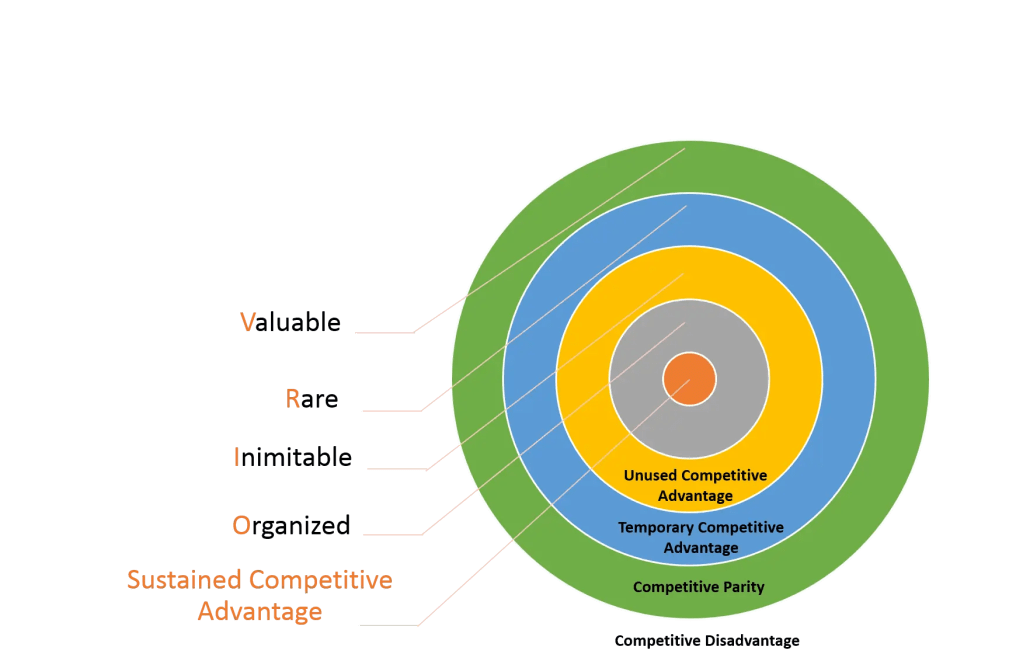
Photo By ClearPoint Strategy
Understanding VRIO in the Context of Healthcare Entrepreneurship:
1. Value: The Foundation of a Competitive Edge
– Definition and Importance:
The ‘V’ in VRIO stands for value. A resource or capability is considered valuable if it enables a firm to exploit opportunities or neutralize threats in the environment. In healthcare, value could manifest in various forms: innovative medical devices, proprietary treatment methods, exceptional patient care, or advanced data analytics capabilities.
Application and Data:
For instance, a 2020 study published in the Journal of Medical Internet Research found that healthcare providers utilizing big data analytics to personalize patient treatment plans saw a 15% increase in patient satisfaction scores. By offering such valued services, healthcare entrepreneurs can meet the rising expectations for personalized healthcare.
2. Rarity: The Path to Standing Out
Definition and Importance:
Rarity refers to the uniqueness of a resource or capability. In the healthcare sector, a rare resource might be a scarce medical specialty, an uncommon technology, or exclusive rights to a groundbreaking pharmaceutical compound.
Application and Data:
According to a 2021 industry report, less than 10% of healthcare providers had adopted next-generation sequencing (NGS) technologies. Entrepreneurs who invest in this rare capability could potentially gain a significant edge in precision medicine.
3. Imitability: Protecting Your Competitive Fortunes
Definition and Importance:
Imitability is about how easily other firms can replicate a company’s valuable and rare resources. In healthcare, this could involve complex regulatory hurdles, patents, or the specialized skills and tacit knowledge of the workforce.
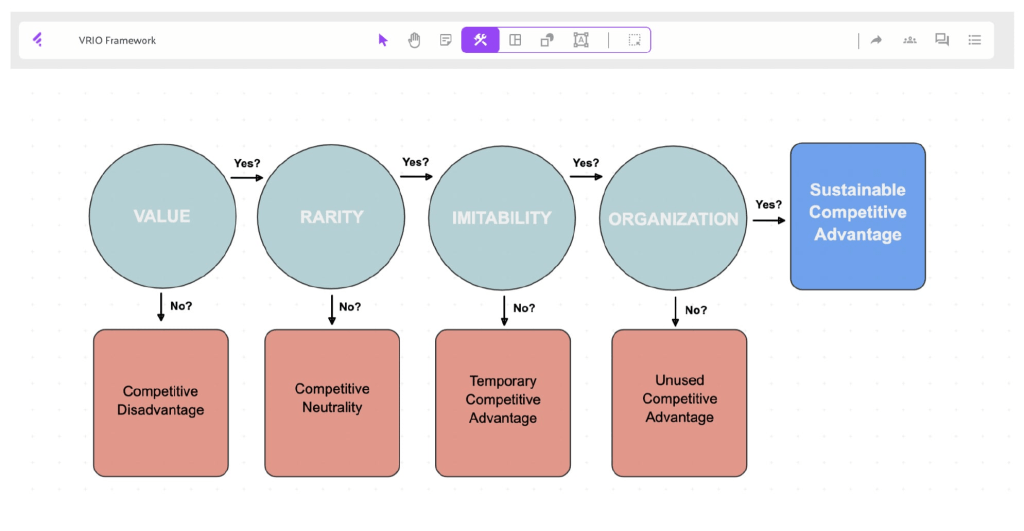
Photo By Question Pro
Application and Data:
A 2019 survey by the Intellectual Property Owners Association highlighted that healthcare companies with strong patent portfolios enjoyed a 20% higher market valuation, on average, than those without.
4. Organization: Harnessing Resources Effectively
Definition and Importance:
The final element of VRIO is the organization’s capability to effectively deploy valuable, rare, and costly-to-imitate resources. This involves having the right processes, systems, and culture in place. In healthcare, this might be reflected in an agile organizational structure that can quickly respond to changes in healthcare regulations or patient needs.
Application and Data:
Research from the Harvard Business Review in 2022 indicated that healthcare organizations with adaptive leadership and change management practices were 30% more likely to implement successful innovation initiatives.
Building a VRIO-Based Strategy for Healthcare Entrepreneurship:
Identifying and Analyzing Resources:
Healthcare entrepreneurs must begin by auditing their existing resources and capabilities against the VRIO dimensions. For example, a telemedicine startup might evaluate its proprietary software platform for VRIO attributes.
Developing a Resource-Based Strategy:
Once valuable, rare, and inimitable resources are identified, the entrepreneur should formulate strategies that leverage these assets. This might mean focusing on niche markets where the firm’s resources are most potent or expanding the scope of services where these resources can be applied.
Sustaining Competitive Advantage:
To sustain the advantage, entrepreneurs must invest in maintaining the rarity and imitability of their resources while staying aligned with organizational capabilities. This may entail continuous innovation, securing intellectual property protection, and fostering a culture of excellence.
Scaling and Adapting:
As the venture grows, the VRIO framework can guide scaling efforts, ensuring that the expansion maintains the strategic alignment and does not dilute the firm’s competitive advantage.
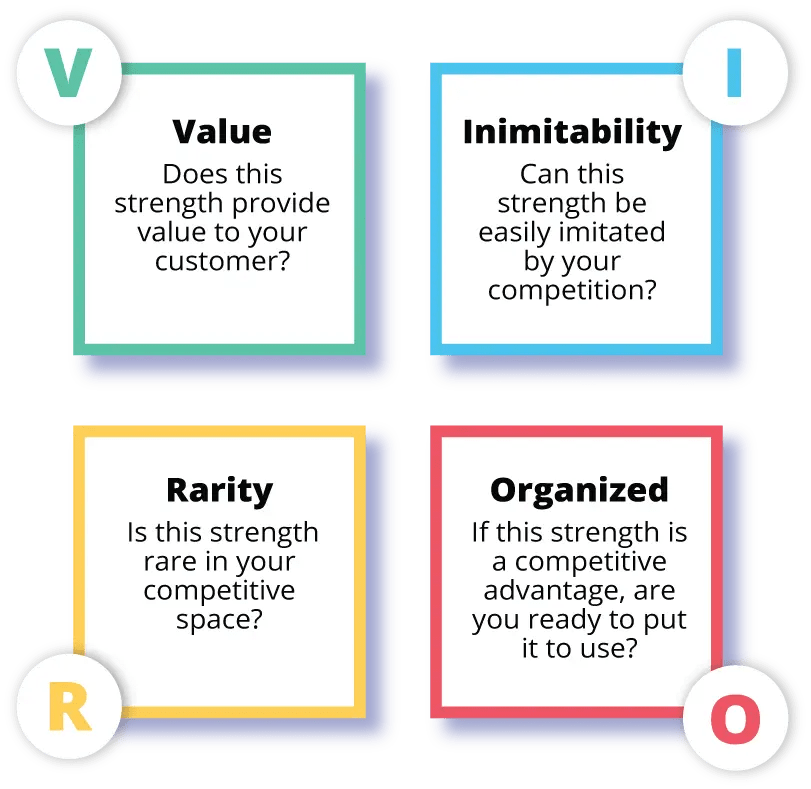
Photo By Onstrategy
The VRIO framework is a powerful tool that, when applied thoughtfully, can guide healthcare entrepreneurs in building a formidable competitive advantage that is difficult for competitors to replicate. By focusing on creating and maintaining resources and capabilities that are valuable, rare, costly to imitate, and supported by the organization, healthcare ventures can position themselves for sustainable success in a highly competitive landscape. The data and principles outlined here serve as a testament to the efficacy of the VRIO framework and provide a roadmap for healthcare entrepreneurs aiming to achieve strategic triumphs in their businesses.
Please leave your comments below

 Dr. Hamza Asumah
Leave a comment