
Hamza Asumah, MD, MBA
In the dynamic world of healthcare, the success of an enterprise hinges on the strength and cohesiveness of its teams. For healthcare entrepreneurs, the challenge is not only to envision a service or product that meets the needs of the patient population but also to assemble and steer a team capable of delivering that vision with excellence and empathy. In this blog, we delve into the principles of building and leading effective healthcare teams, supported by relevant data and insights that will guide entrepreneurs on their journey to running successful healthcare businesses.

Photo By MIT Sloan Management Review
The Blueprint for Building Effective Healthcare Teams:
1. Diversity and Inclusion: A study by McKinsey & Company (2020) showed that companies with diverse teams are 35% more likely to outperform their less diverse counterparts. In healthcare, diversity is not just a metric; it’s a catalyst for innovation. Entrepreneurs should strive to build teams that reflect the diversity of the patients they serve, including a range of ages, races, genders, and cultural backgrounds. This diversity fosters a broader spectrum of ideas and approaches to problem-solving.
2. Clear Roles and Responsibilities: The complexity of healthcare services necessitates clearly defined roles. Each team member should understand their responsibilities and how they fit within the larger mission of the organization. Clarifying roles can reduce overlaps and gaps in service delivery, thus enhancing efficiency. A study by the American Hospital Association (AHA) reveals that role clarity can improve patient outcomes by streamlining care processes.
3. Continuous Education and Training: The healthcare industry is perpetually advancing. As such, ongoing education is vital. Providing team members with continuous training opportunities not only keeps them at the forefront of their respective fields but also conveys a commitment to their professional growth. According to the National Center for Healthcare Leadership (NCHL), ongoing education is associated with higher job satisfaction, which can translate into better patient care.
4. Interdisciplinary Collaboration: Healthcare entrepreneurs should encourage collaboration across different specialties. A study published in the Journal of Interprofessional Care highlights that interdisciplinary teams can improve care quality by integrating varied expertise and perspectives, which is crucial for complex patient needs.
5. Communication and Transparency: Open lines of communication are fundamental. A report by The Joint Commission states that communication failures are at the root of over 70% of serious adverse health outcomes in hospitals. Implementing robust communication protocols and fostering an environment where team members feel comfortable voicing concerns and ideas can mitigate risks and enhance service quality.
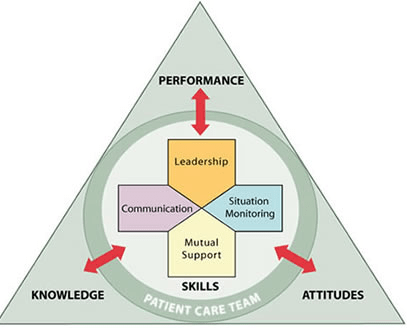
Photo By Agency For Healthcare Research
Leading with Vision and Empathy:
1. Lead by Example: Healthcare leaders must exemplify the qualities they wish to see in their teams, such as integrity, dedication, and compassion. A Gallup study found that the manager or team leader alone accounts for 70% of the variance in team engagement. As such, the entrepreneur’s behavior sets the tone for the entire organization.
2. Emotional Intelligence: Successful healthcare leaders possess high emotional intelligence. They are adept at recognizing and managing their own emotions, as well as perceiving and influencing the emotions of others. According to the Center for Creative Leadership, leaders with high emotional intelligence are more likely to create an atmosphere of trust and collaboration.
3. Empowerment and Autonomy: Empowering team members to make decisions and take ownership of their work can lead to innovation and improved patient care. A study by the Agency for Healthcare Research and Quality (AHRQ) found that empowerment initiatives could lead to increased job satisfaction and reduced turnover.
4. Recognition and Reward: Recognizing and rewarding team members for their contributions can have a profound impact on morale and motivation. Data from the Society for Human Resource Management (SHRM) indicates that recognition programs are associated with a 29% increase in profitability and a 24% improvement in quality.
5. Resilience and Adaptability: The healthcare landscape is fraught with challenges and changes. Leaders must cultivate resilience and adaptability, not only within themselves but within their teams. Research from the American Psychological Association shows that resilient teams are better equipped to handle stress, rebound from failures, and adapt to change.

Photo By MDPI
Building and leading effective healthcare teams is a complex but rewarding endeavor. By embracing diversity, fostering role clarity, investing in continuous education, encouraging interdisciplinary collaboration, and maintaining open communication, healthcare entrepreneurs can create teams that are well-equipped to meet the demands of the industry. Moreover, leading with vision, empathy, emotional intelligence, and an empowering spirit can inspire teams to perform at their best. Recognizing the efforts of team members, fostering resilience, and staying adaptable are the hallmarks of a successful leader in the fast-paced world of healthcare.
Please leave your comments below

 Dr. Hamza Asumah
Leave a comment