Hamza Asumah MD, MBA
The world of entrepreneurship is filled with diverse schools of thought, each offering unique perspectives on achieving success in the business realm. One influential voice in this domain is Robert Kiyosaki, whose book “Why ‘A’ Students Work for ‘C’ Students and ‘B’ Students Work for the Government” presents a provocative view on the value of financial education over traditional academic achievement. For healthcare entrepreneurs or ‘Doctorpreneurs’ in Africa, the principles outlined by Kiyosaki can provide a strategic framework for building successful businesses within a challenging and often under-resourced healthcare landscape. In this blog post, we will explore how Kiyosaki’s principles can be applied to empower African healthcare entrepreneurs to innovate and thrive.

Photo By Amazon
Understanding Kiyosaki’s Core Principles
Kiyosaki’s book revolves around the premise that traditional education systems are designed to produce employees rather than entrepreneurs. He argues that ‘A’ students, who excel in academic environments, are often conditioned to seek secure employment, while ‘C’ students are more likely to think outside the box and pursue entrepreneurial ventures. ‘B’ students, caught in the middle, are inclined toward stable government jobs. Central to Kiyosaki’s philosophy is the importance of financial education, which he believes is the key to financial independence and entrepreneurial success.
Applying Kiyosaki’s Principles in the African Healthcare Context
1. Financial Literacy and Investment Savvy
The African healthcare sector is replete with opportunities for innovation, but it also requires substantial financial investment to overcome infrastructural deficits and resource limitations. Doctorpreneurs must become financially literate, understanding not only the medical aspects of their venture but also the economic dynamics that drive profitability and sustainability. By embracing Kiyosaki’s principle of financial education, healthcare entrepreneurs can make informed decisions about investing in the right technology, managing cash flow, and allocating resources effectively.
2. Entrepreneurial Mindset Over Academic Achievement
While medical training is essential for any healthcare provider, Kiyosaki’s principles encourage doctorpreneurs to adopt an entrepreneurial mindset that goes beyond clinical expertise. This means being willing to take calculated risks, being innovative in service delivery, and always looking for new opportunities to serve patients more effectively. In the African context, where healthcare needs are vast and diverse, this entrepreneurial approach can lead to transformative solutions, such as mobile health clinics, telemedicine services, and affordable medical devices.
3. Embracing Failure as a Learning Tool
Kiyosaki emphasizes the importance of learning from failure, a concept that can be particularly valuable in the high-stakes environment of healthcare. African healthcare entrepreneurs must not fear failure but rather view it as a stepping stone to greater understanding and improvement. By fostering a culture that encourages experimentation and learning from mistakes, doctorpreneurs can overcome obstacles and find successful models that work within their specific regional context.

Photo By Four Minute Books
4. Creating Value and Leveraging Networks
Kiyosaki suggests that the wealthiest individuals are those who create value for others. In the healthcare sector, this translates to providing services that genuinely improve patient outcomes and community health. African doctorpreneurs can leverage their networks, including partnerships with NGOs, government agencies, and other healthcare professionals, to amplify their impact and create a robust healthcare ecosystem that addresses the unique needs of the population.
5. The Power of Passive Income
One of Kiyosaki’s key tenets is the generation of passive income streams, which can provide financial stability and allow entrepreneurs to focus on growing their businesses. For African healthcare entrepreneurs, developing passive income could mean creating health-related products, such as over-the-counter medications, health supplements, or medical devices that can be sold alongside their primary services. It might also involve establishing health education platforms or subscription-based telehealth services that generate ongoing revenue without necessitating the doctor’s presence at all times.
6. Education Through Real-World Experience
Kiyosaki is a proponent of learning through real-world experience rather than traditional classroom education. For healthcare entrepreneurs in Africa, this can be achieved by immersing oneself in the communities they serve to understand firsthand the health challenges faced by the population. This hands-on approach can lead to more innovative and culturally appropriate healthcare solutions, as well as foster a deeper connection with patients and the community.
7. Preparing for Economic Changes
Africa’s healthcare landscape is subject to economic fluctuations, policy changes, and external factors such as foreign aid shifts. Kiyosaki’s advice to prepare for and adapt to economic changes is invaluable for doctorpreneurs. By staying informed about economic trends and policy developments, healthcare entrepreneurs can pivot their strategies as needed, ensuring their ventures remain viable in changing circumstances.
8. Teaching Financial Education
Lastly, Kiyosaki’s passion for teaching financial education can be mirrored by healthcare entrepreneurs who can educate their patients and communities about health financing and insurance options. Many Africans lack access to health insurance or are unaware of how to manage health-related expenses. Doctorpreneurs can play a pivotal role in increasing financial awareness, which, in turn, can lead to better healthcare outcomes and a more informed patient base.
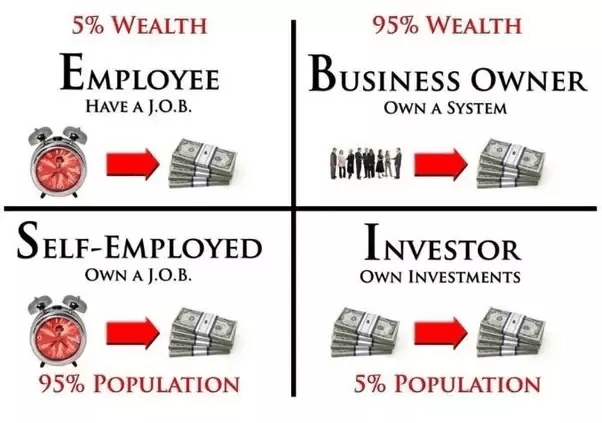
Photo By Book Summaries
The principles laid out by Robert Kiyosaki in “Why ‘A’ Students Work for ‘C’ Students and ‘B’ Students Work for the Government” offer valuable insights for healthcare entrepreneurs in Africa. By focusing on financial literacy, adopting an entrepreneurial mindset, embracing failure as part of the learning process, creating value, leveraging networks, generating passive income, gaining real-world experience, preparing for economic shifts, and educating others, African doctorpreneurs can build successful and sustainable businesses. The journey to transform healthcare in Africa is fraught with challenges but armed with the right principles and a commitment to innovation, the continent’s healthcare entrepreneurs can make a lasting impact on the lives of millions.
Remember that the success of healthcare ventures in Africa also hinges on understanding the local context and cultural nuances, which are not explicitly addressed in Kiyosaki’s book but are essential for any business operating in diverse African environments. Therefore, while Kiyosaki’s principles provide a strong foundation, they must be adapted and applied with a deep understanding of the specific healthcare landscape within which an African doctorpreneur operates.
Please leave your comments below

 Dr. Hamza Asumah
Leave a comment