
Hamza Asumah, MD, MBA
If you’re a healthcare entrepreneur, you’re in a unique position to reshape the industry through innovation. The journey can be challenging, but understanding your team’s dynamics can make a significant difference. Tim Grover’s concept of “Coolers, Closers, and Cleaners,” as detailed in his book “Relentless: From Good to Great to Unstoppable,” provides a helpful framework.
Grover, a renowned performance coach, divides professional athletes into three categories: Coolers, Closers, and Cleaners. But his concept is not only applicable to sports. It can provide insights into team dynamics in any business, including healthcare startups.

Photo from Amazon
Coolers, Closers, and Cleaners: Understanding the Framework
Coolers are good team members who do their jobs without causing any trouble. They’re reliable, but they require clear direction and rarely take the initiative. Many teams are predominantly composed of coolers, providing a stable workforce but lacking the drive to push boundaries.
Closers are the next level up. They can handle pressure and deliver results when needed. Closers are typically the top performers in a stable environment, but their performance can waver when faced with unexpected challenges.
Finally, Cleaners are the game-changers. They are self-motivated, relentless, and thrive under pressure. Cleaners take responsibility for their performance and don’t shy away from challenging situations. They can adapt, innovate, and drive a team or company to new heights.
Applying the Framework in a Healthcare Startup
As a healthcare entrepreneur, identifying the Coolers, Closers, and Cleaners in your team can help you delegate tasks more effectively, drive innovation, and manage your team better.
Coolers are essential for maintaining daily operations. They can manage routine tasks, ensuring that the business runs smoothly. However, they might struggle with innovation and may need explicit instructions for tasks outside their regular duties.
Closers are your go-to team members when you need to meet specific targets or deadlines. They can handle pressure and are usually high performers. However, if your startup is in a phase of rapid change or facing an unexpected challenge, they might not be the best choice to lead a project.
Cleaners, on the other hand, thrive in such situations. They have the drive and the ability to innovate and adapt. If your startup is at a phase where it needs to pivot, or if you’re facing a steep challenge, your Cleaner is the person to lead the charge.

Photo By NJlifehacks
Who to Rely on Most?
While all three categories have their roles in a startup, research suggests that businesses in the healthcare industry benefit most from Cleaners. According to a study published in the Journal of Business Venturing, startups that are more innovative tend to have higher growth rates. This implies that having a Cleaner, who is naturally inclined towards innovation, can be beneficial.
A Harvard Business Review article also suggests that startups often need to pivot, and those that pivot once or twice can raise 2.5 times more money, have 3.6 times better user growth, and are 52% less likely to scale prematurely. This further highlights the importance of having Cleaners on your team.
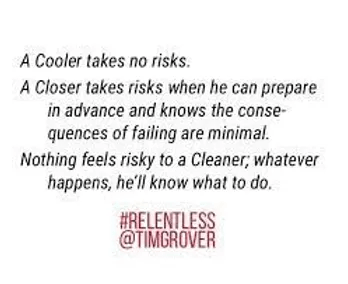
Photo By Matthew Cossens
In the end, a successful healthcare startup needs a mix of Coolers, Closers, and Cleaners. The key is to identify who falls into which category and leveraging their strengths accordingly. While Coolers and Closers provide stability and high performance in stable environments, Cleaners are typically the ones who can take a startup to the next level through innovation and adaptation. As a healthcare entrepreneur, recognizing and nurturing these attributes in your team members can significantly impact your startup’s success.
Please leave your comments below

 Dr. Hamza Asumah
Leave a comment