
Hamza Asumah, MD, MBA
The Dunning-Kruger effect describes a cognitive bias where individuals with low ability or expertise in a certain area overestimate their skills, while those with higher ability underestimate their skills. This phenomenon has been observed in various sectors, but it is particularly relevant to the healthcare industry in Africa, where the stakes are high, and the margin for error is slim. In this blog post, we will explore the role of the Dunning-Kruger effect in building a successful healthcare business in Africa and discuss strategies to overcome this cognitive bias.

Photo By Manchester Digital
While there is limited quantitative research data specifically on the impact of the Dunning-Kruger effect on healthcare businesses and entrepreneurs in Africa, there are several studies and reports that highlight the importance of addressing cognitive biases and skill gaps in the healthcare sector. These findings can be extrapolated to understand the potential impact of the Dunning-Kruger effect on healthcare businesses in Africa.
1. The World Health Organization (WHO) has identified the importance of addressing skill gaps and improving the quality of healthcare professionals in Africa. According to a WHO report, Africa faces a severe shortage of healthcare professionals, with a deficit of 4.2 million workers in the region (WHO, 2016). This shortage, coupled with the Dunning-Kruger effect, may exacerbate the challenges faced by healthcare businesses in Africa.
2. A study conducted in Nigeria found that there was a significant relationship between healthcare professionals’ self-assessment of their skills and their actual performance (Oyeyemi et al., 2015). The study concluded that self-assessment should be promoted as an important tool for identifying gaps in knowledge and skills, which can help mitigate the impact of the Dunning-Kruger effect on healthcare businesses.
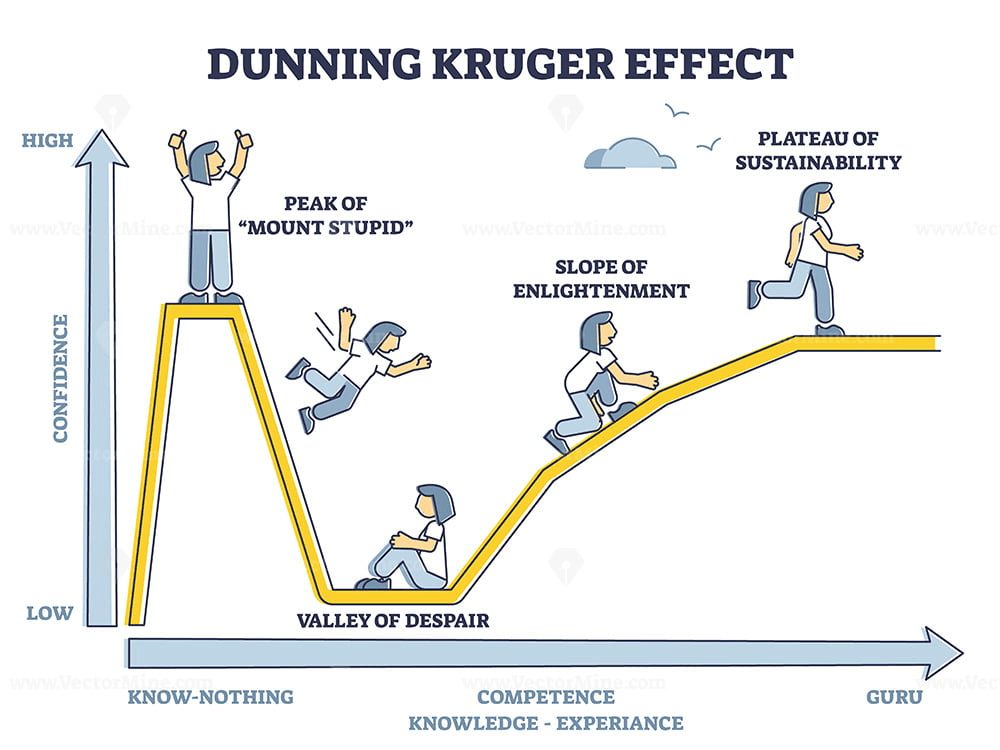
Photo By Vector Mine
3. Research conducted by the African Leadership Academy (ALA) found that entrepreneurs in Africa often face challenges related to overconfidence and cognitive biases, including the Dunning-Kruger effect (ALA, 2018). According to the study, entrepreneurs who recognize and address these biases have a higher chance of success.
4. A study published in the Journal of Global Health highlighted the importance of improving healthcare management and leadership in sub-Saharan Africa (Rowe et al., 2018). The study concluded that addressing cognitive biases, such as the Dunning-Kruger effect, and investing in management and leadership training could significantly improve healthcare outcomes in the region.
While there is limited research data specifically on the impact of the Dunning-Kruger effect on healthcare businesses in Africa, existing studies and reports underscore the importance of addressing cognitive biases and skill gaps in the healthcare sector. By acknowledging the Dunning-Kruger effect and implementing strategies to counteract its influence, healthcare organizations and entrepreneurs can improve the quality of healthcare services and increase the likelihood of success in the African healthcare market.
The Dunning-Kruger Effect in Africa’s Healthcare Industry
In the rapidly evolving healthcare landscape of Africa, the Dunning-Kruger effect can have far-reaching consequences. It can lead to mismanagement of resources, suboptimal decision-making, and ultimately, hinder the growth and success of healthcare businesses. Here are a few scenarios where the Dunning-Kruger effect can have a significant impact on healthcare organizations:
1. Inadequate assessment of skills: Healthcare professionals who overestimate their abilities may take on tasks that are beyond their expertise, leading to poor patient outcomes and damaging the reputation of the healthcare facility.
2. Resistance to learning and self-improvement: Overconfidence in one’s skills can create a barrier to ongoing professional development, as individuals may not recognize the need to update their knowledge or improve their skills.
3. Poor decision-making: Managers who overestimate their understanding of the healthcare market may make ill-informed decisions, leading to wasted resources and missed opportunities for growth.
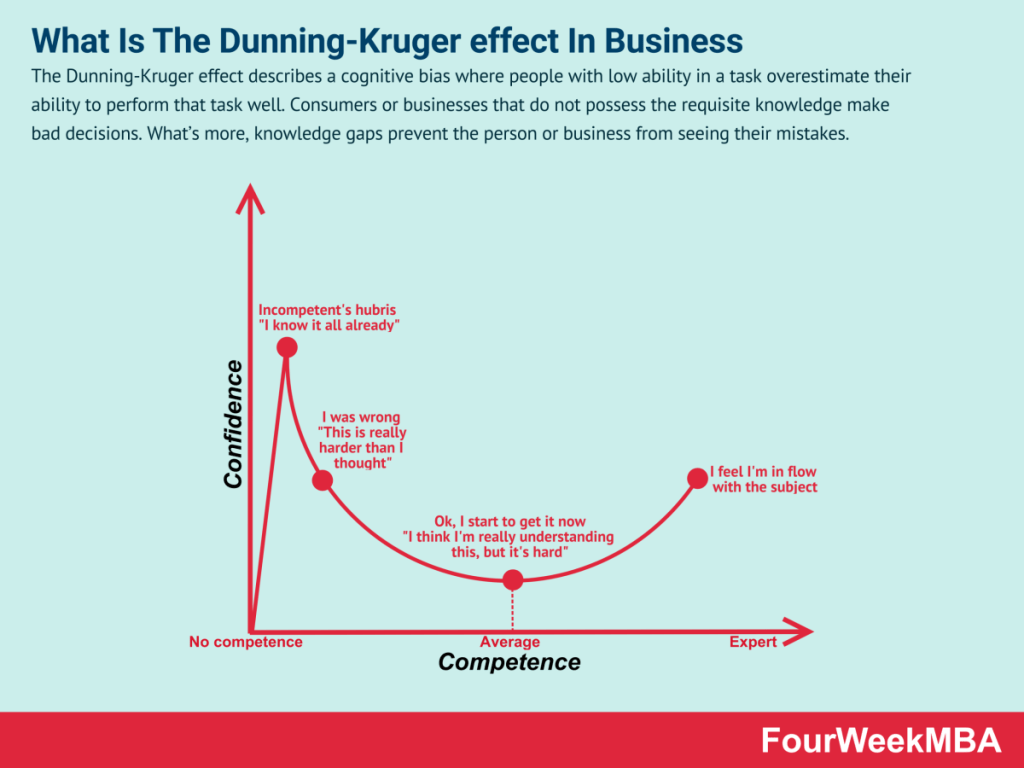
Photo By FourWeekMBA
Overcoming the Dunning-Kruger Effect
To build a successful healthcare business in Africa, it is crucial to acknowledge and address the Dunning-Kruger effect. Here are some strategies to mitigate its impact:
1. Encourage a culture of self-assessment and reflection: Foster an environment where healthcare professionals regularly assess their skills and knowledge and identify areas for improvement. This can be achieved through performance reviews, feedback sessions, and self-assessment tools.
2. Invest in professional development: Provide healthcare workers with opportunities for continuous learning and development, such as training programs, workshops, and conferences. This not only helps to bridge knowledge gaps but also instills a culture of lifelong learning.
3. Promote collaboration and teamwork: Encourage healthcare professionals to work together and learn from each other’s experiences and expertise. This can lead to better decision-making and improved patient outcomes.
4. Seek external validation: Establish partnerships with reputable institutions and organizations, such as universities and accreditation agencies, to validate the quality of your healthcare services. This can help to identify areas of improvement and ensure that your healthcare business maintains high standards.
5. Establish clear communication channels: Ensure that healthcare professionals can communicate their concerns, ideas, and suggestions openly and without fear of reprisal. This can help to identify potential problems and areas of weakness early on, allowing for timely intervention and resolution.
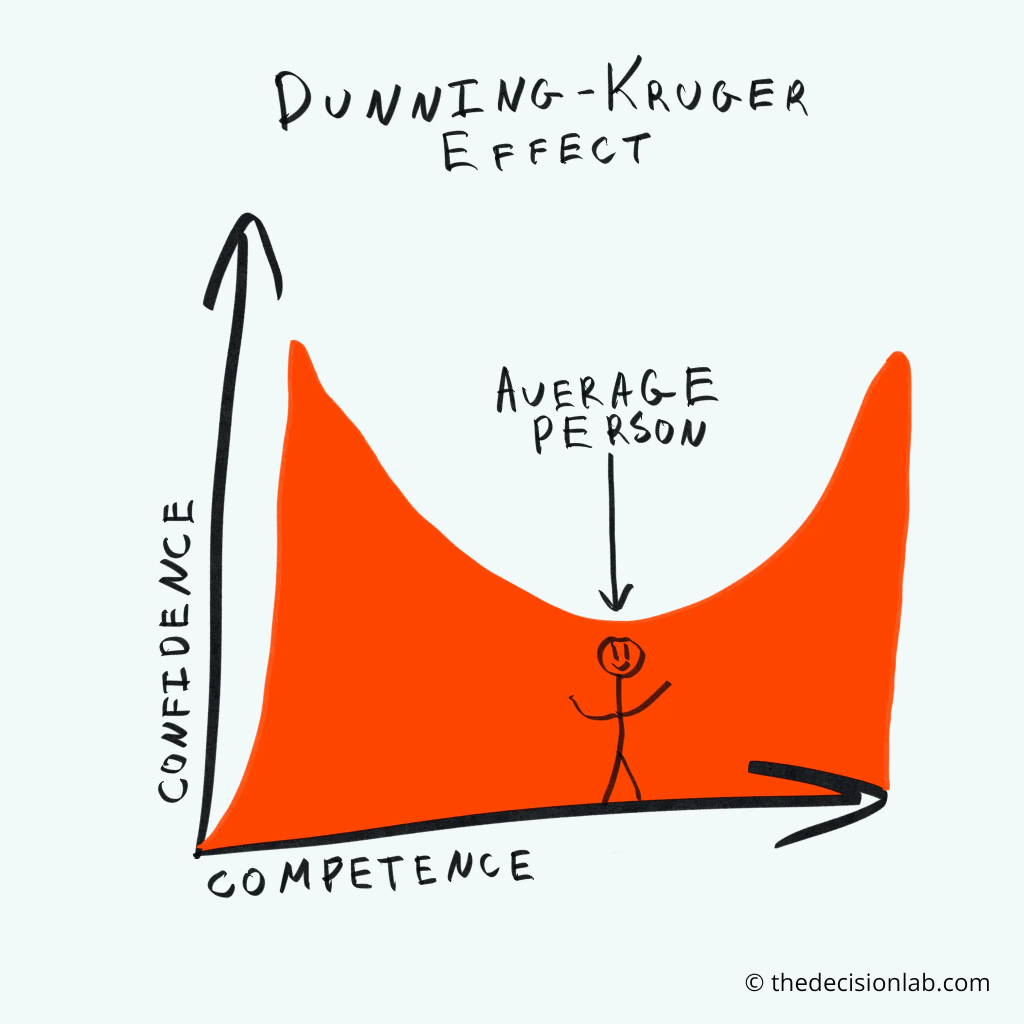
Photo By The Decision Lab
The Dunning-Kruger effect can pose significant challenges to the growth and success of healthcare businesses in Africa. However, by recognizing its existence and implementing strategies to counteract its influence, healthcare organizations can create a culture of continuous learning and improvement, ultimately leading to better patient outcomes and a thriving healthcare industry in the continent.
Please leave your insights in the comment section below


 Dr. Hamza Asumah
Leave a comment