
Hamza Asumah, MD
Changing environmental factors and problematic scenarios have compelled healthcare administrators, nurses, physicians, and other professionals to adopt new leadership methods and behaviors in order to adapt.
When I first learned about situational leadership, I was compelled to investigate the various ways this idea may be applied to build highly productive staff in my healthcare organization.
Situational leadership theory, according to Alsaqqa (2020), means that leaders may “adjust their leadership approaches based on team members’ preparedness, present abilities, and developmental level” (p. 233). It is especially essential in the medical facility context, as events change quickly and unpredictably, necessitating quick and case-specific judgments from management. Thus, while managing disputes, taking into account the context of the event enhances the chance of a constructive resolution.

Photo by African Mission Healthcare
The healthcare business has had a tumultuous life during the last 20 years. Rivalry, the expansion of managed care, customer demand for quality standards, and the expensive cost of new medical technology all contribute to this instability. These altering environmental circumstances have compelled healthcare organizations and management to devise new response tactics.
Let me clarify some vocabulary that will help you comprehend this topic. High relationship behavior indicates that you are actively connected with your employees by providing continual training and assistance. Low relationship conduct means that you do not communicate with your staff on a regular basis.
That being said, To put this into practice, you must recognize that your leadership style must adapt to the type of employee you are dealing with. This allows you to increase the employee’s benefit and productivity. If you can tailor this to an employee’s requirements, you will be able to get the most out of them, which is especially important in a fast-paced workplace like the healthcare industry. These four situational leadership styles should serve as a guidance.
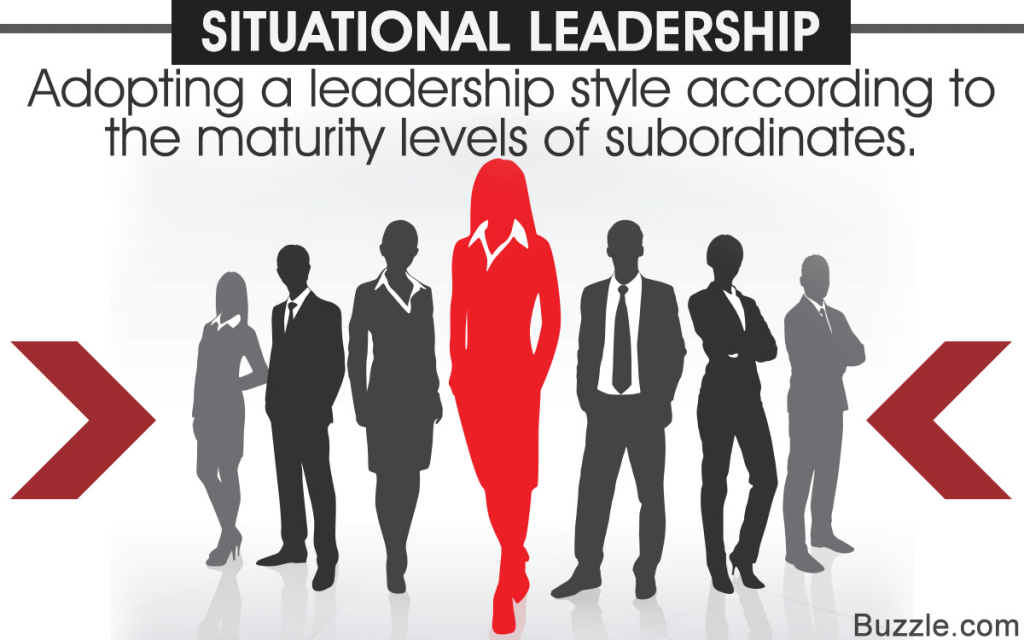
Photo by Social Mettle
Telling (Directing) is used for persons who require direction and motivation. This entails one-way communication, step-by-step instructions, and a clear understanding of the repercussions of failure. The work is clarified by the leader, who also sets milestones, monitors, provides feedback, and rewards output.
When an employee is unable to complete a task due to a lack of expertise, the leader must devote much more time to working with the employee, providing clear instructions and continuous follow-up. The leader must be supportive and motivating, delivering praise for positive accomplishments and corrective feedback for less-than-great outcomes. The goal is to inspire the follower to advance to the next level of skill. THIS STYLE IS VERY EFFECTIVE FOR NEW EMPLOYEES
Selling (Coaching) is for employees who wish to learn more. This employee is motivated, yet he may be lacking in abilities. The leader mentors the employee, fostering confidence and ability. This is the right fit for the employee after a few weeks/months on the job.
The aim is to entice the follower to go to the next level. There is less “telling” and more “suggesting,” resulting in greater encouragement and coaching. It acknowledges their progress and pushes them to continue on their path.
Participating (Supporting) leadership is for employees who can operate independently but lack confidence. These employees still require supervision and assistance.

Photo by The Gunter Group
The follower is now extremely skilled, but he or she is not totally sure of his or her abilities or is not fully devoted to doing their best and excelling. The leader must now focus on the relationship between the follower, the leader, and the group rather than the duties assigned.
Delegating leadership is appropriate for individuals who are self-assured and competent. They understand what has to be done. And they are capable of doing the task on their own. These employees can assume additional responsibilities. The leader continues to monitor performance, although from a distance.
The leader may now transfer responsibilities to the follower and watch with minimum follow-up, knowing that satisfactory, if not great, outcomes would be obtained. There is a lack of emphasis on duties and a lack of emphasis on relationships. There is no necessary to applaud the follower on every job, but repeated praise for exceptional achievement should be offered as needed.
In a rapidly changing environment like the healthcare sector, it is important to carve out your leadership style to match the situation. This inevitably translates into highly productive staff who will turn your business into a well-oiled machine.
Please leave your comments below on what your experience has been in situational leadership.

 Dr. Hamza Asumah
Leave a comment